How to choose the right sewing machine for your work
A practical guide from our Rajkot workshop to help tailors, boutique owners and home users pick a sewing machine that actually fits their daily work.
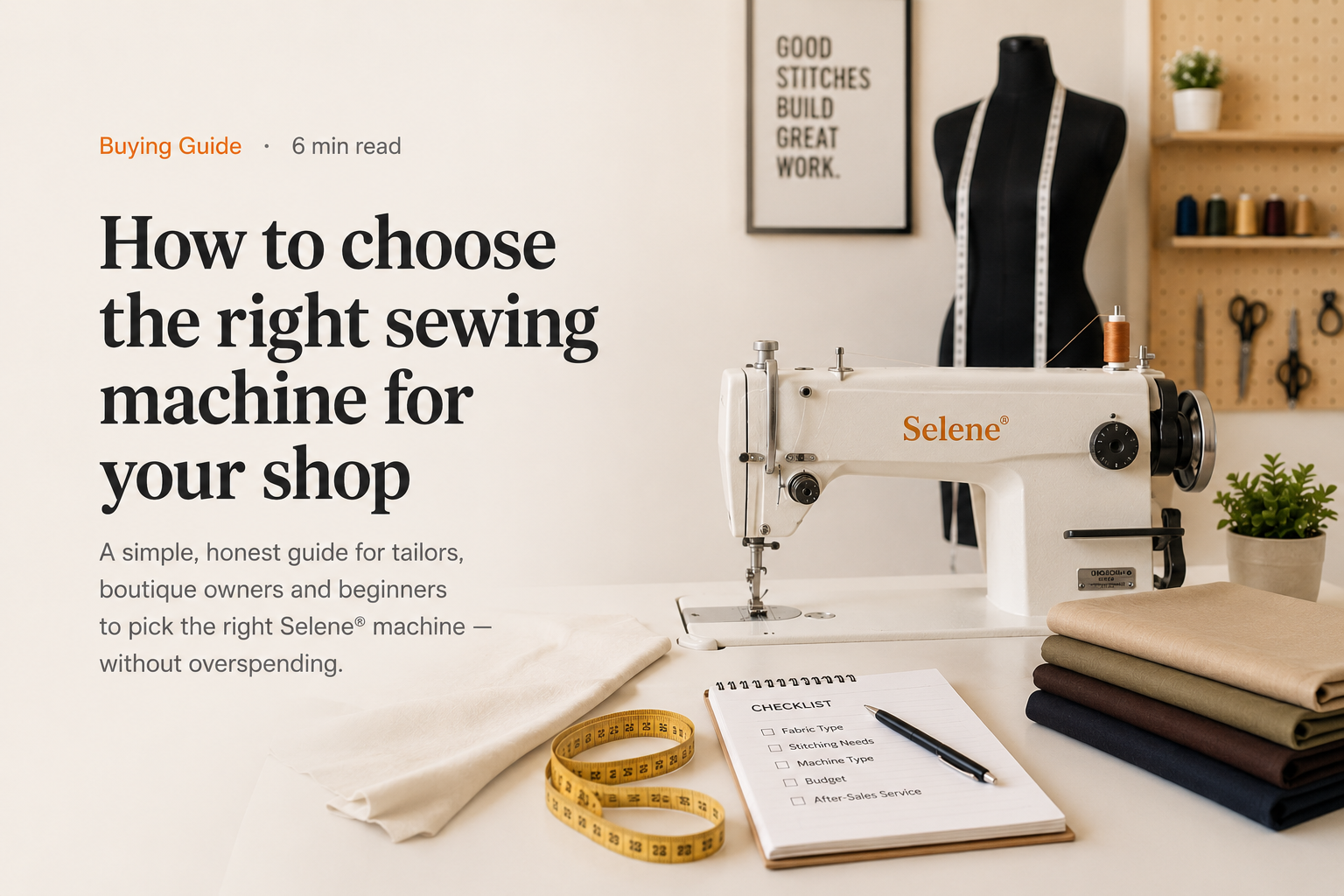
A sewing machine is a long-term tool. Pick the right one and it quietly does its job for years. Pick the wrong one and you end up adjusting, repairing and replacing it far too soon. Over the years at our Rajkot workshop, we have helped a lot of tailors, boutique owners and home users with this decision, and the advice almost always comes down to a few simple questions.
1. Start with the fabric you stitch most
The fabric decides almost everything. If your day-to-day work is on cotton, suiting, shirting or lighter blends, a good domestic or semi-industrial machine is usually enough. If you regularly work with denim, canvas, jeans, bags, leather or upholstery, you need a heavy-duty machine with a stronger motor and a proper walking foot. Choosing a light machine for heavy fabric is one of the most common mistakes we see.
2. Match the speed to your real workload
A home tailor stitching a few pieces a day does not need a high-speed industrial head. A boutique handling regular orders may want something faster and quieter. A small factory running full shifts needs a proper industrial machine built to run all day. Buy the speed you actually use, not the speed that sounds impressive on paper.
3. Think about service and spare parts
A machine is only as useful as the support behind it. Before buying any brand, ask where you will get service, how easily you can get common spares like needles, bobbins, belts and feet, and whether someone nearby can open it up when something goes wrong. We have been in the sewing machine business since 1992 as Parmar Sewing Machine in Rajkot, and this is the part most buyers underestimate.
4. Keep some budget for the setup
A good machine on a shaky table will never give you good stitches. Plan for a sturdy stand or table, decent lighting, a few extra needles in the right sizes, oil, and a basic cover. A small reserve for the first service after a few months of use is also a good idea.
5. Don't buy more than you need
It is tempting to pick the model with the most features, but extra functions you never use only add cost and small things that can go wrong. Be honest about your work today and where it will be in the next two to three years, and choose accordingly. If you are not sure, we are happy to talk it through with you before you decide.
Have questions about a Selene® machine?
Talk to our team — we'll help you pick the right model and connect you with your nearest dealer.
Talk to us →